





- Choosing a selection results in a full page refresh.
LONGGUANG currently has more than 3,000 industrial brush products, covering all industries such as auto parts, mechanical parts, hydraulic parts, etc. Our products are widely used in the polishing, de-rusting, and deburring of metal parts processing; metal sheet, strip cleaning, grinding, descaling; finishing of textile, printing, and dyeing leather products, sanding; dust removal, grinding and coating of paper and artificial boards Glue; cleaning, polishing, deburring of circuit boards; cleaning of glass and LCD substrates; cleaning and descaling of pipes; sealing and dust proofing of furniture, storage, and machinery.
Couldn't load pickup availability
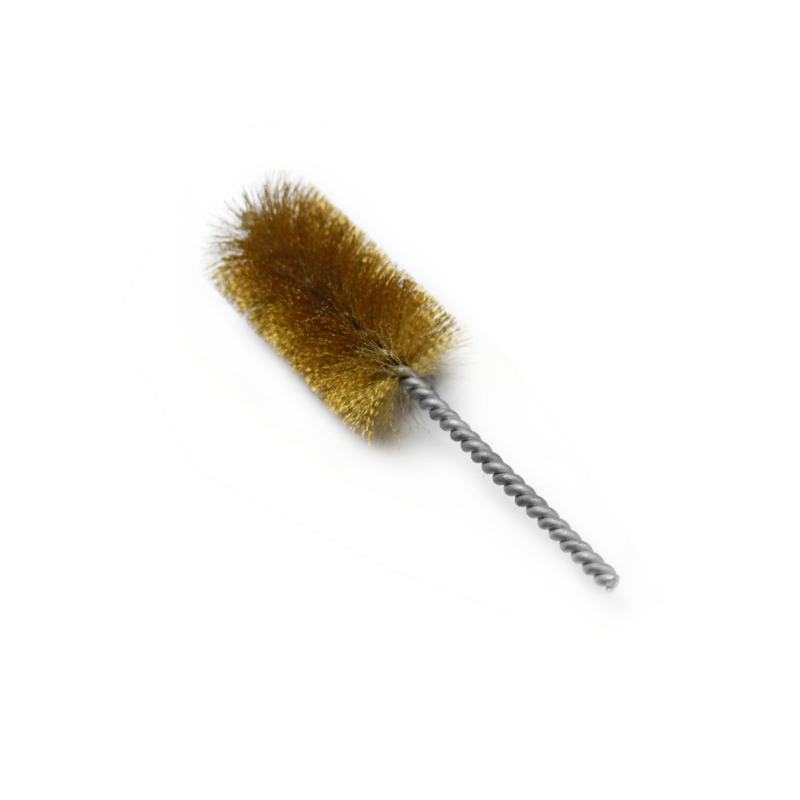
Our brass wire tube brush is manufactured from brass wire and engineered for pipe cleaning soft metals, with key advantages including soft and non-abrasive to base metal, non-sparking during operation and excellent electrical conductivity for anti-static applications.
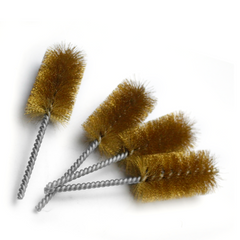
Also known as custom brass wire tube brush, industrial tube brush or tube brush for pipe cleaning soft metals. Also referenced as a brass wire internal tube brush or twisted brass wire tube brush: the brass filaments are locked into a single spiral twisted steel stem that holds full 360° contact with the bore wall, and the exposed stem end chucks directly into electric drills, machine tool spindles or manual holders.
Outer diameter, brush length, filament height, and steel core diameter can be tailored
This brush is built from 2 material groups – the pure brass wire and steel:
Note: While brass wire brushes have a shorter service life than abrasive or steel wire brushes on hard materials, they are the preferred choice for applications requiring non-sparking, anti-static, or non-marring surface treatment.
Primary Applications:
Specific Industry Use Cases:
Related internal links
For more aggressive deburring on hard materials:
For non-abrasive cleaning options:
For external surface applications:
Explore the full Tube Brush Series for more internal cleaning solutions.
In practice the same brush is specified as brass bore cleaning brushes, brass bristle wire brush or small brass wire brush depending on the application.
Q1: Why use brass wire instead of steel wire for tube and pipe cleaning?
Brass wire is softer than steel wire, so the filaments clean and deburr low-hardness workpieces such as aluminum alloy parts, copper components, brass fittings and soft steel without scratching or over-cutting the base metal. Brass also offers better oxidation resistance than plain steel wire in certain environments.
Q2: Is this brass wire tube brush safe to use in explosion-proof areas?
Yes. Brass wire does not spark during operation, which makes the brush suitable for oil and gas pipelines, petrochemical and chemical plants, grain handling equipment and pharmaceutical manufacturing where spark prevention is critical.
Q3: How does brass wire help with static control?
Brass has excellent electrical conductivity, so the filaments dissipate static charge as they brush. That prevents electrostatic buildup on electronic device housings, semiconductor manufacturing equipment and other electrostatic-sensitive assemblies.
Q4: How long does a brass wire brush last compared with other tube brushes?
On hard materials brass wire has a shorter service life than abrasive or steel wire brushes. It is the preferred choice where non-sparking, anti-static or non-marring surface treatment matters more than maximum cutting power.
Q5: Can the dimensions be customized to my tube or bore?
Yes. Outer diameter, brush length, filament height and steel core diameter can all be tailored, and the steel core can be twisted or wound for flexibility and torque transmission. Send us the tube bore, working length and equipment details for a recommendation.
Contact us for technical recommendations, custom sizing, and bulk order quotes. Share your workpiece material, geometry, and equipment details for a prompt engineering review.
Thanks for subscribing!
This email has been registered!