



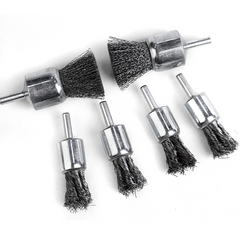
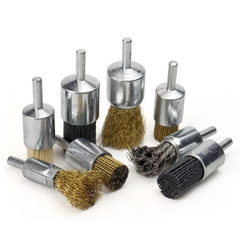
Product Overview
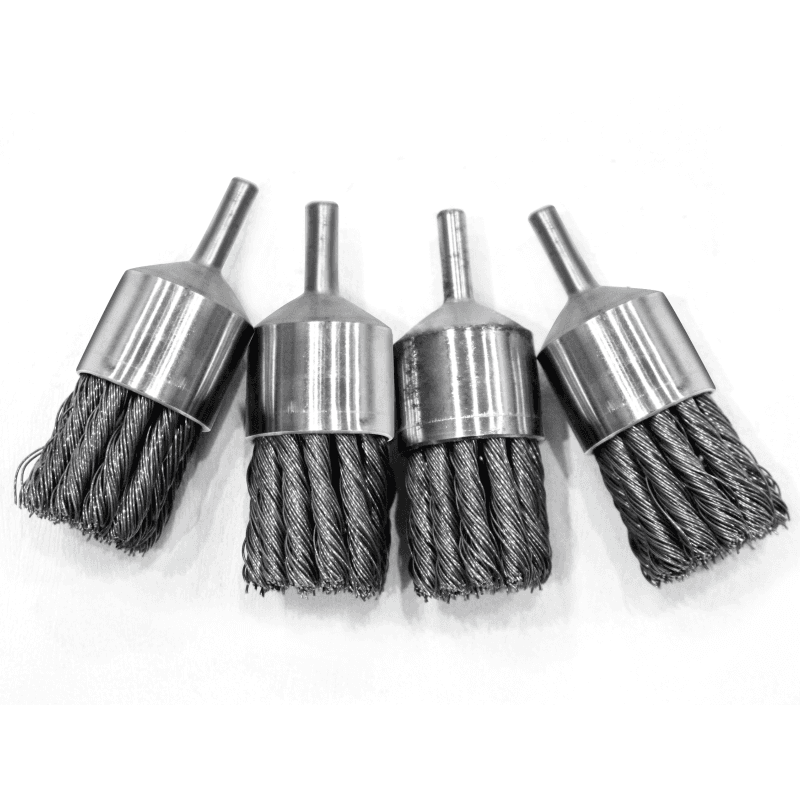
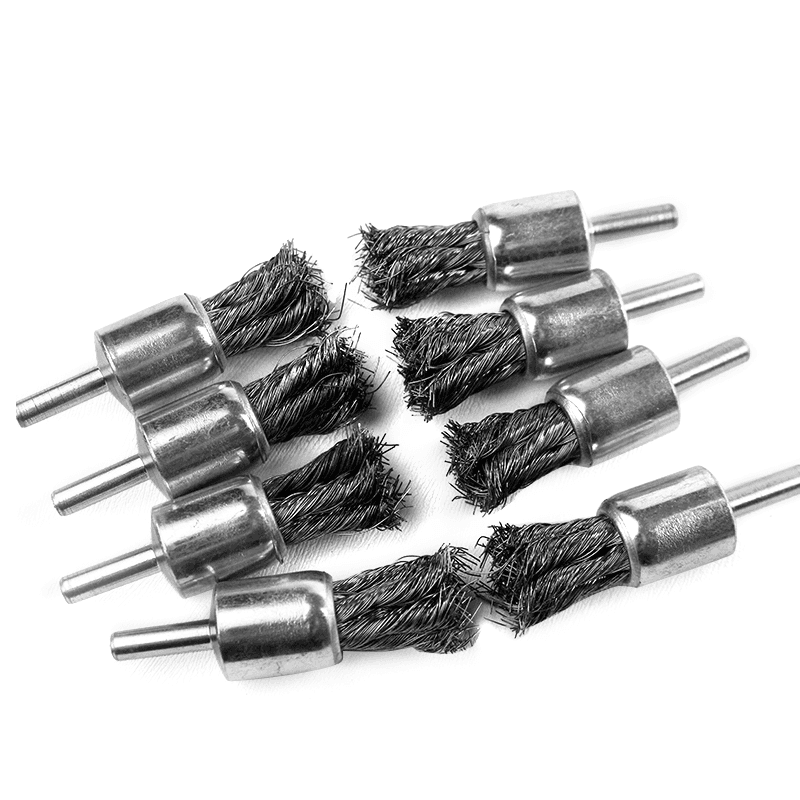
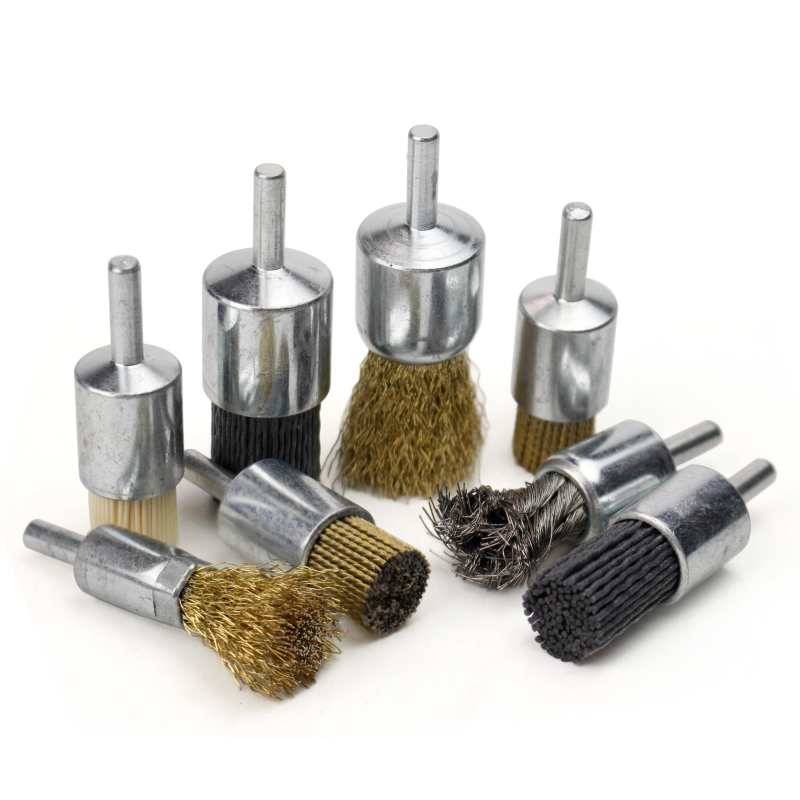
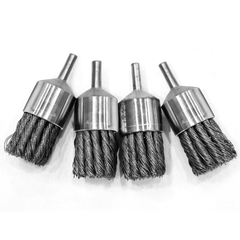
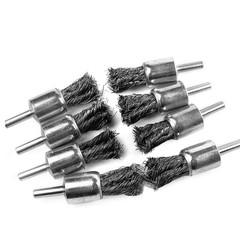
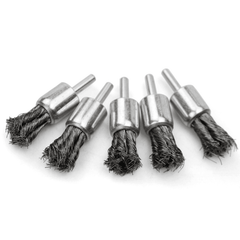
Our stainless steel wire knotted end brush is manufactured from stainless steel wire and engineered for aggressive heavy-duty deburring, with key advantages including superior aggressive cutting power, multi-strand stainless steel wire and high-speed capability.
Also known as custom stainless steel wire knotted end brush, industrial end brush or end brush for aggressive heavy-duty deburring.
Specifications and Custom Sizes
Stainless Steel Wire End Brush Specifications
Customizable according to customer requirements – brush diameter, trim length, and shank size fully tailored. Available in standard and custom dimensions to match your specific application.
Reference Drawing:

Standard Series:
| Dia A | Trim B | Shaft D. C | Shaft l. D | Total l. E | Part No. | Bundle count | |
|---|---|---|---|---|---|---|---|
| Ø0.35 Carbon Steel | Ø0.5 Carbon Steel | ||||||
| 20 | 30 | 6 | 22 | 75 | BN353020 | BN503020 | 6 |
| 25 | 30 | 6 | 20 | 77 | BN353025 | BN503025 | 10 |
| 29 | 30 | 6 | 18 | 78 | BN353029 | BN503029 | 12 |
Material Composition
This brush is built from 2 material groups – the multiple stainless steel wires twisted into and steel shank for secure mounting in:
- Filament Material: Multiple stainless steel wires twisted into durable knots (available in 304 or 316 stainless steel) – multi-strand twisted construction provides maximum impact force and aggressive cutting action
- Shank Material: Steel shank for secure mounting in power tools, CNC holders, and drill chucks
Features and Applications
Heavy Duty Wire Brush
Our Heavy-Duty Stainless Steel Twisted Knot End Brush is engineered for the most demanding industrial surface preparation and deburring tasks. The brush features multiple stainless steel wires twisted into rigid, durable knots – a construction that delivers significantly higher impact force and faster material removal compared to standard crimped wire brushes .
- Superior Aggressive Cutting Power – twisted knot construction provides a "hammering" action that rapidly removes heavy rust, thick scale, weld spatter, and stubborn coatings
- Multi-Strand Stainless Steel Wire – each knot consists of multiple wires twisted together for exceptional durability and fatigue resistance; available in 304 or 316 stainless steel for corrosion resistance
- High-Speed Capability – rated for operation up to 20,000 RPM, with balanced design for smooth performance
- Versatile Shank Design – steel shank fits standard drill chucks, collets, and CNC tool holders
- Customizable Dimensions – brush diameter, trim length, and shank specifications tailored to your equipment and workpiece requirements
End Brush for Aggressive Heavy-duty Deburring
- Heavy-Duty Deburring – removing large burrs from machined steel and cast iron components
- Rust and Scale Removal – stripping heavy rust, mill scale, and oxidation from steel surfaces and structural components
- Weld Cleaning and Slag Removal – cleaning weld seams, removing weld spatter and slag in tight spaces
- Deep Hole and Cavity Cleaning – accessing confined spaces, recessed areas, cylinders, and internal passages
- Coating and Paint Stripping – removing heavy coatings, paint, and surface contaminants
- Substrate Roughening – surface profiling for coating adhesion preparation
- Heavy Oil and Grease Cleaning – removing stubborn oil deposits from industrial equipment and parts
- Equipment Refurbishment – surface conditioning and restoration of heavy machinery components
Industry Applications:
- Metal fabrication and structural steelwork
- Automotive manufacturing and engine component rebuilding
- Shipbuilding and marine maintenance
- Heavy equipment repair and refurbishment
- Aerospace component surface preparation
- Industrial maintenance and repair operations
Material Selection Guide:
| Wire Material | Best For |
|---|---|
| 304 Stainless Steel | General corrosion resistance, stainless steel workpieces, wet environments |
| 316 Stainless Steel | Marine environments, chemical exposure, maximum corrosion resistance |

In practice the same brush is specified as metal brush heavy duty depending on the application.
Frequently Asked Questions (FAQ)
Q1: What is the difference between twisted knot and crimped wire end brushes?
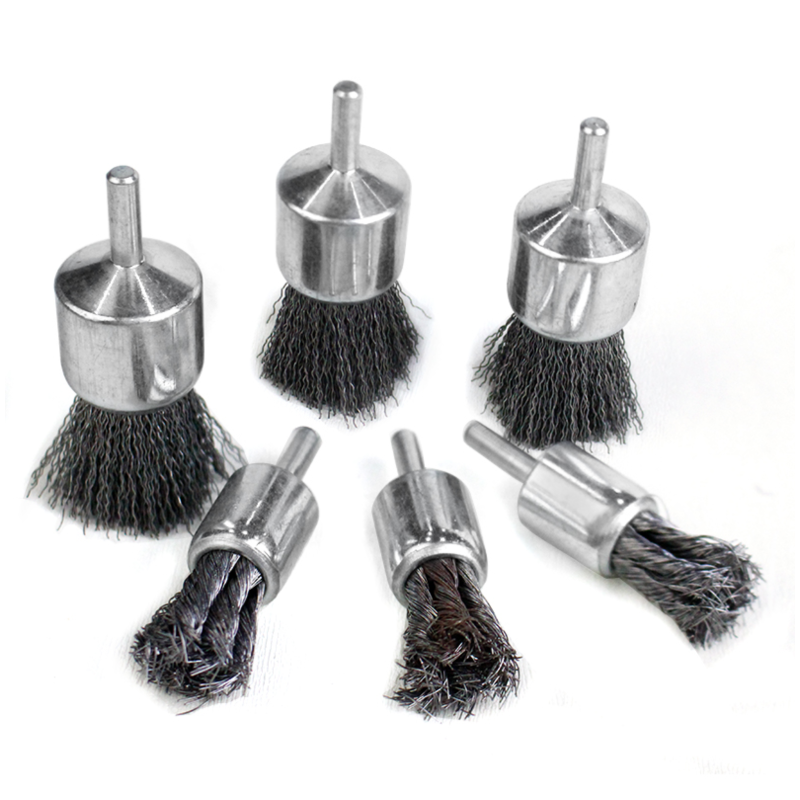
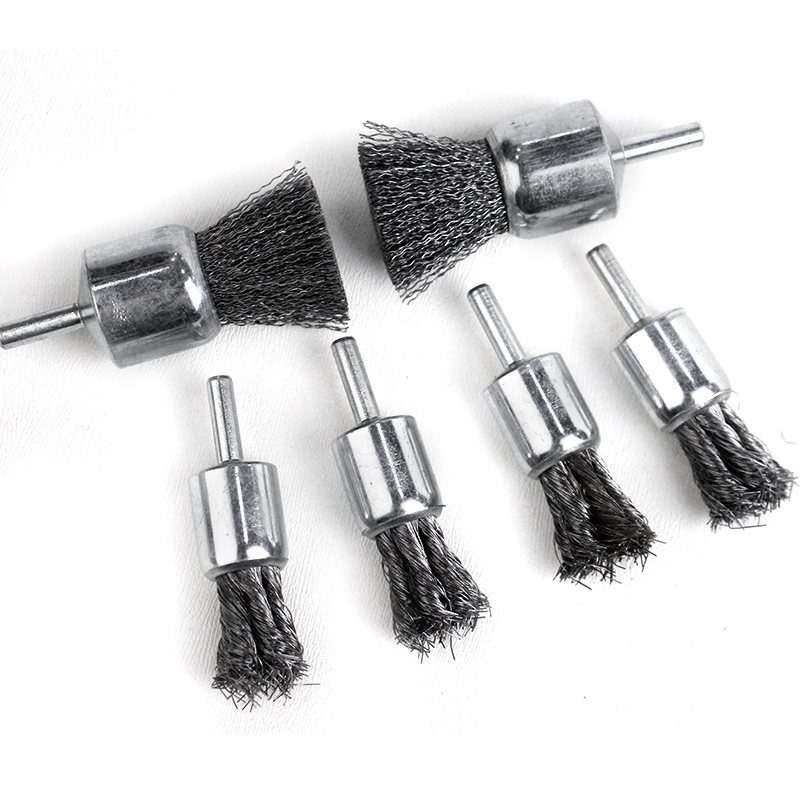
Twisted knot brushes have wires twisted into rigid knots that deliver a "hammering" impact action for aggressive material removal – ideal for heavy rust, weld spatter, and thick scale. Crimped wire brushes have wave-shaped filaments that provide a more flexible scrubbing action for lighter cleaning and finishing . For heavy-duty applications, twisted knot is the recommended choice.
Q2: What operating speed should I use for this brush?
Twisted knot end brushes are rated for high-speed operation up to 20,000 RPM . Always start at lower speeds and increase gradually. The brush will flare or open slightly during rotation, which allows it to access confined spaces and internal bores . Use within the recommended speed range for optimal performance and safety.
Q3: When should I choose 304 vs. 316 stainless steel wire?
Choose 304 stainless steel for general corrosion resistance and stainless steel workpiece finishing . Choose 316 stainless steel for marine environments, chemical exposure, or applications requiring maximum corrosion resistance . Both options prevent rust contamination on stainless steel workpieces.
Q4: Can this brush be used on aluminum or soft metals?
For aluminum, brass, copper, and other soft metals, we recommend abrasive nylon or crimped wire brushes rather than twisted knot steel wire. Twisted knot steel wire is specifically designed for aggressive material removal on ferrous metals, steel, cast iron, and hard alloys . Using this brush on soft metals may cause gouging or surface damage.
Q5: How do I select the correct brush diameter for my application?
The brush diameter should be slightly larger than the hole or cavity you are cleaning – the brush will flare or compress during operation to conform to the workpiece . For holes and internal bores, select a diameter that provides approximately 10-20% interference with the bore wall. Contact our engineering team with your specific bore dimensions for precise sizing recommendations.
Ready to Improve Your Heavy-Duty Deburring and Surface Preparation Operations?
Our stainless steel twisted knot end brushes are engineered for maximum aggression and durability. Available in 304 and 316 stainless steel with customizable diameters, trim lengths, and shank configurations to fit your equipment and application specifications.
Contact us for technical recommendations, custom sizing, and bulk order quotes. Provide your application details, workpiece material, and equipment specifications for a prompt engineering review.
Browse our full End Brush Series for additional deburring and finishing solutions, or explore our custom industrial brushes for other specialized requirements.
Further Reading
Related Categories
- Choosing a selection results in a full page refresh.