






Product Name:
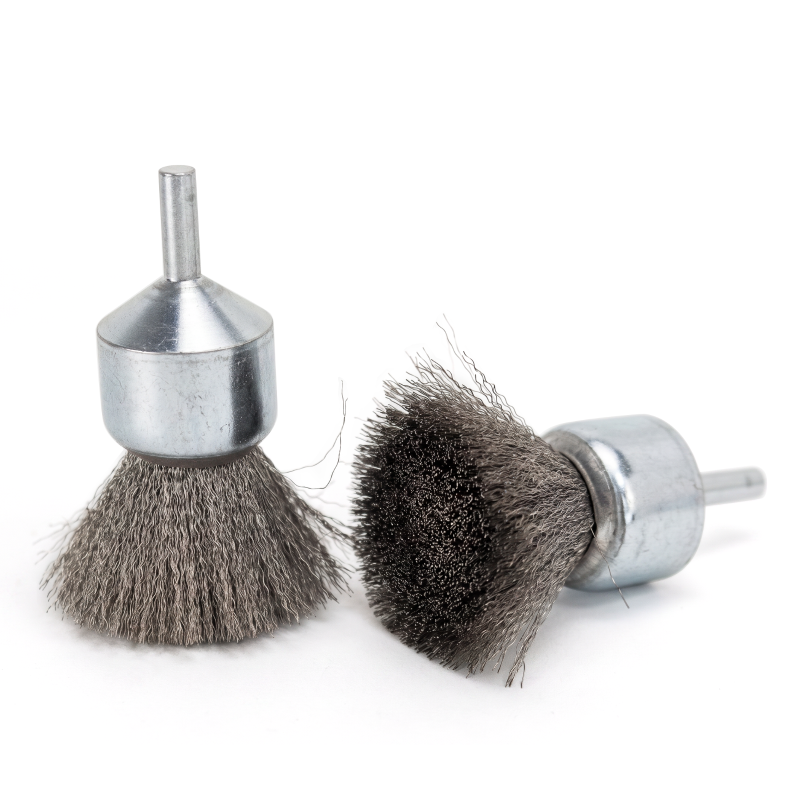
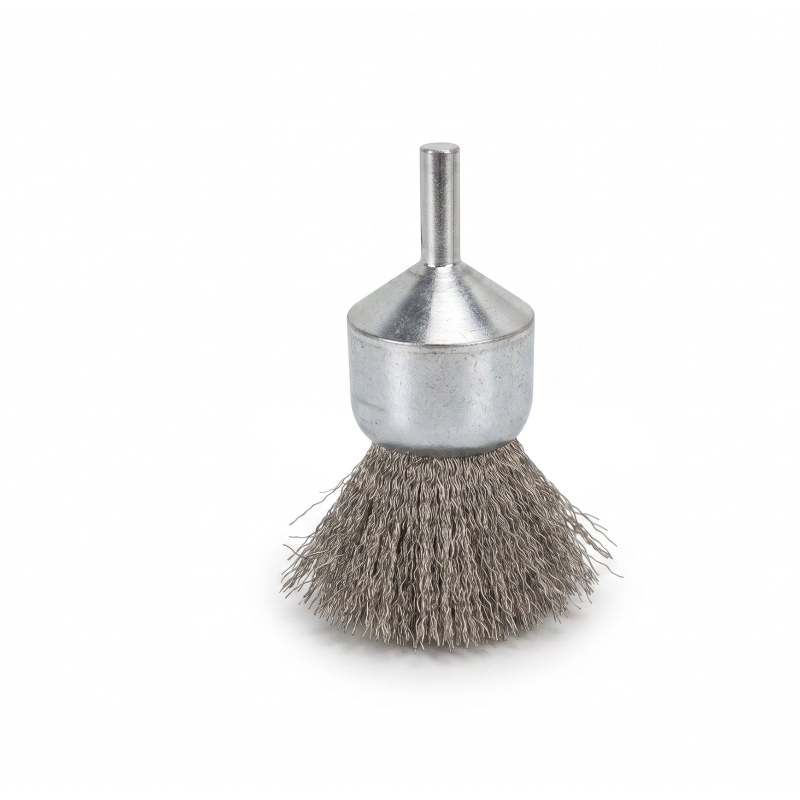
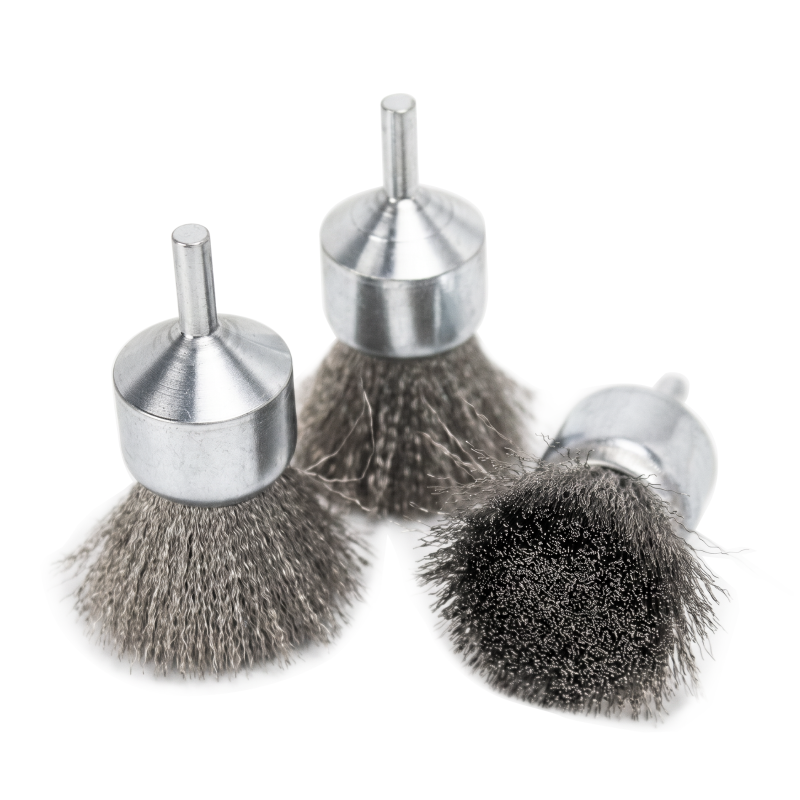
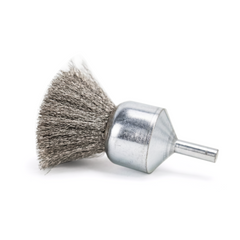
Stainless Steel Crimped Wire End Brush – Flexible Finishing for Stainless Steel and Non-Ferrous Surfaces
Product Size:
Customizable according to customer requirements – brush diameter, trim length, and shank size fully tailored. Standard and custom dimensions available.
Refference Drawing:


Standard Series:
| Dia A | Trim B | Shaft D. C | Shaft l. D | Total l. E | Part No. |
| 0.22 copper plated | |||||
| 10 | 20 | 6 | 18 | 58 | BT222010 |
| 12 | 25 | 6 | 21 | 66.5 | BT222512 |
| 14 | 25 | 6 | 17 | 67 | BT222514 |
| 16 | 25 | 6 | 23 | 75 | BT222516 |
| 18 | 25 | 6 | 23 | 71 | BT222518 |
| 20 | 30 | 6 | 22 | 75 | BT223020 |
| 25 | 30 | 6 | 20 | 77 | BT223025 |
| 29 | 30 | 6 | 18 | 78 | BT223029 |
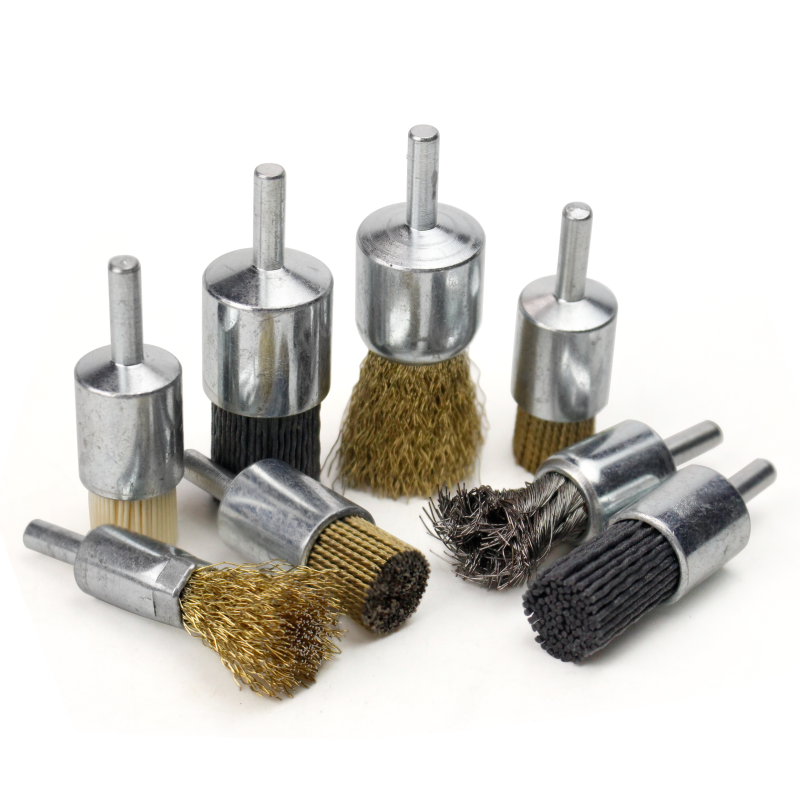
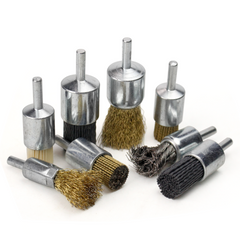
| • Available brush filament types include: copper-plated steel wire, stainless steel wire, and multi-strand twisted wire. • Customizable wire diameter specifications are available, with standard options including: ф0.15, ф0.22, and ф0.3. |
|||||
Product Material Composition:
-
Filament Material: Crimped stainless steel wire (available in 304 or 316 stainless steel) – wave-shaped filaments provide flexible, gentle brushing action with superior corrosion resistance
-
Shank Material: Steel shank for secure mounting in power tools, drill chucks, CNC tool holders, die grinders, and right-angle grinders
Product Features and Applications:
Our Stainless Steel Crimped Wire End Brush features wave-shaped (crimped) stainless steel wire filaments that provide a flexible, cushion-like brushing action. The filaments are processed through specialized crimping equipment to create a continuous wave pattern, resulting in a uniform, dispersed filament arrangement with excellent buffering performance compared to straight or twisted knot wires . This design delivers controlled, consistent surface finishing without aggressive material removal.
Key Features:
-
Flexible Crimped Wire Action – wave-shaped filaments provide superior buffering and conformability to irregular surfaces, contours, and complex geometries
-
Corrosion-Resistant Stainless Steel – available in 304 stainless steel for general corrosion resistance, or 316 stainless steel for maximum corrosion resistance in marine and chemical environments
-
Iron Contamination Prevention – stainless steel filaments will not rust or leave iron contamination on non-ferrous workpieces, making them ideal for stainless steel, aluminum, and other corrosion-sensitive materials
-
Solid End Construction – durable design with bands around the fill to reduce flaring and provide controlled brushing action
-
Versatile Finishing Capability – ideal for fine weld seam treatment, light rust removal, surface texturing, matte finishing, and precision cleaning
-
High-Speed Capability – rated for operation up to 20,000 RPM, compatible with die grinders, drills, CNC machines, and pneumatic tools
-
Cost-Effective for Stainless Applications – higher cost than carbon or copper-plated steel, but essential for applications requiring corrosion resistance and iron-free finishing
Application Fields:
-
Weld Seam Finishing – post-weld cleaning, oxidation removal, and blending on stainless steel fabrications
-
Surface Preparation – creating anchor patterns for painting, powder coating, or electroplating on metal surfaces
-
Light Rust and Oxidation Removal – gentle cleaning of surface oxidation, tarnish, and light corrosion
-
Metal Surface Texturing – achieving brushed, matte, or satin finishes on decorative stainless steel surfaces
-
Precision Cleaning – cleaning pipe interiors, tube IDs, cavities, and hard-to-reach recessed areas
-
Mold and Tool Maintenance – polishing and cleaning plastic molds, rubber molds, and die surfaces
-
Component Refurbishment – routine maintenance cleaning of industrial equipment, valves, and precision components
Industry Applications:
-
Stainless Steel Decorative Finishing – architectural panels, as well as kitchen‑related equipment
-
Food Processing and Pharmaceutical Equipment – sanitary surface finishing with zero contamination risk
-
Hydraulic and Pneumatic Components – precision bore cleaning and surface preparation for seals
-
Automotive – interior and exterior trim finishing, engine component surface preparation
-
3C Electronics and Precision Hardware – fine finishing of electronic enclosures and small precision parts
-
Aerospace and Defense – corrosion-resistant surface preparation on aluminum, titanium, and composites
-
Mold and Die Manufacturing – polishing injection molds and die casting tools without altering critical dimensions
-
New Energy Industry – battery and solar component surface conditioning
Construction Comparison:
Frequently Asked Questions (FAQ)
Q1: When should I choose 304 vs. 316 stainless steel for the crimped wire brush?
Choose 304 stainless steel for general applications where moderate corrosion resistance is sufficient – suitable for most fabrication, automotive, and general industrial work. Choose 316 stainless steel for marine environments, chemical exposure, food processing, pharmaceutical applications, or any situation requiring maximum corrosion resistance .
Q2: What is the difference between crimped and twisted knot end brushes?
Crimped wire brushes have wave-shaped filaments that provide flexible, buffered brushing action ideal for light cleaning, finishing, and irregular surfaces . Twisted knot brushes have rigid, twisted wire knots that deliver aggressive hammering action for heavy rust removal, weld spatter cleaning, and thick scale stripping . For fine finishing on stainless steel, crimped is the recommended choice.
Q3: What operating speed should I use for this brush?
Crimped stainless steel end brushes are rated for high-speed operation up to 20,000 RPM . For weld cleaning and surface preparation, recommended peripheral speeds are 35-45 m/s; for polishing and finishing, 30-40 m/s . Always start at lower speeds and increase gradually.
Q4: Can this brush be used on aluminum or other non-ferrous metals?
Yes, stainless steel crimped wire brushes are ideal for aluminum and other non-ferrous metals. Unlike carbon steel brushes, stainless steel filaments will not rust or leave iron contamination on workpieces, preventing galvanic corrosion and surface pitting .
Q5: How do I select the correct brush diameter and shank size for my application?
Brush diameter should be slightly larger than the hole or cavity you are cleaning – the brush will compress during operation to conform to the workpiece. For hard-to-reach areas and corners, select a diameter that provides adequate filament contact without forcing the brush. The 1/4" (6mm) shank is standard for most die grinders and drill chucks . Contact our engineering team with your specific bore dimensions for precise sizing recommendations.
Ready to Improve Your Stainless Steel and Non-Ferrous Surface Finishing?
Our stainless steel crimped wire end brushes are available in 304 and 316 stainless steel with customizable diameters, trim lengths, and shank configurations to match your equipment and application specifications. We offer custom sizing for precision finishing on stainless steel, aluminum, and other corrosion-sensitive materials.
Contact us for technical recommendations, custom sizing, and bulk order quotes. Provide your application details, workpiece material, and equipment specifications for a prompt engineering review.
Browse our full End Brush Series for additional deburring and finishing solutions, or explore our custom industrial brushes for other specialized requirements.