




- Choosing a selection results in a full page refresh.
LONGGUANG currently has more than 3,000 industrial brush products, covering all industries such as auto parts, mechanical parts, hydraulic parts, etc. Our products are widely used in the polishing, de-rusting, and deburring of metal parts processing; metal sheet, strip cleaning, grinding, descaling; finishing of textile, printing, and dyeing leather products, sanding; dust removal, grinding and coating of paper and artificial boards Glue; cleaning, polishing, deburring of circuit boards; cleaning of glass and LCD substrates; cleaning and descaling of pipes; sealing and dust proofing of furniture, storage, and machinery.
Couldn't load pickup availability
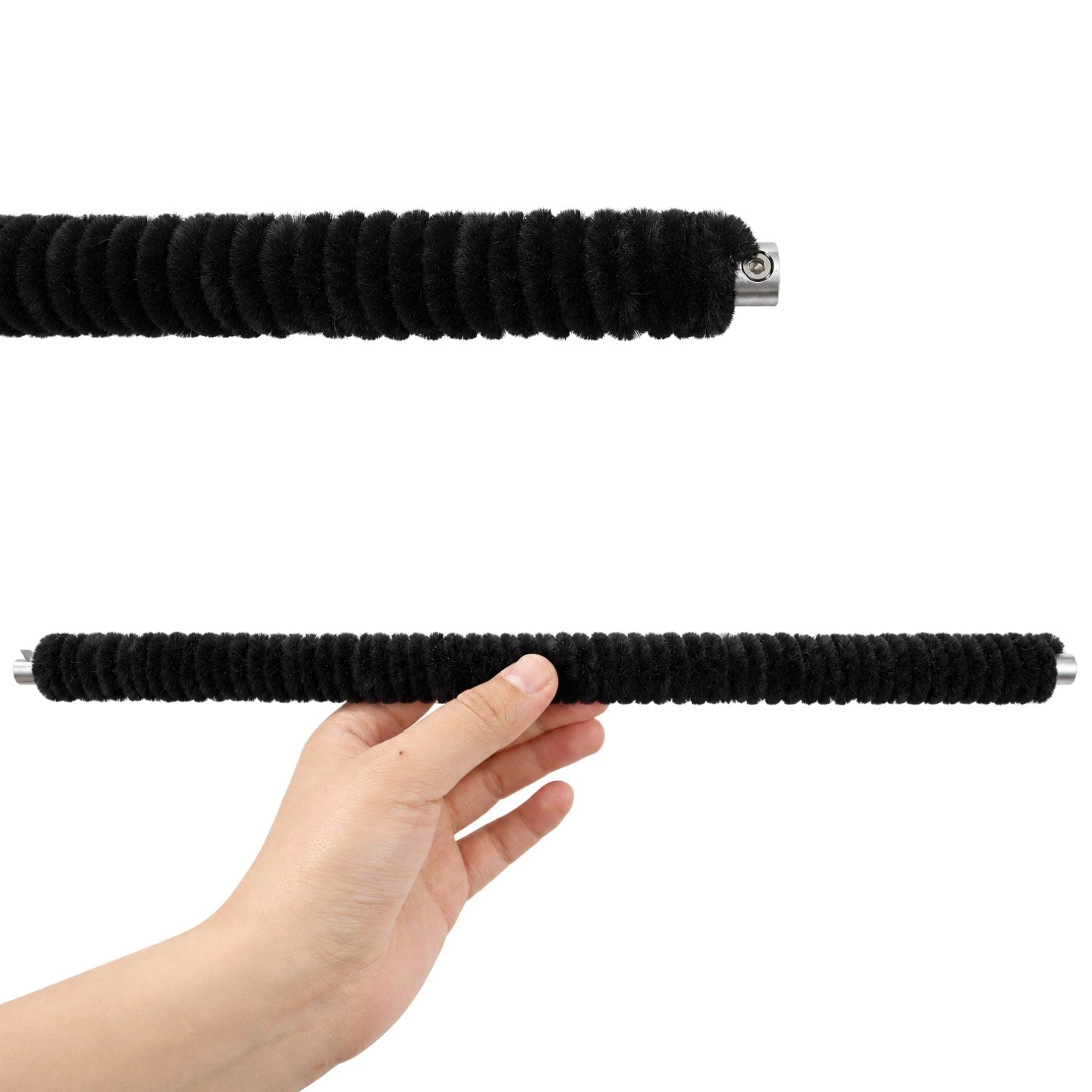
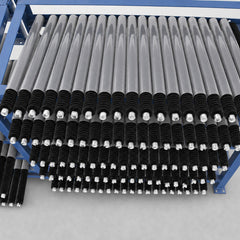
Our PCB cleaning nylon brush roller is built from ultra-fine nylon filament as fine as 0.003 mm, formed into a dense, velvet-like black pile wound in continuous helical bands around a stainless steel core. It is engineered for dry dust removal on rigid PCB and flexible FPC surfaces, where copper foil, solder mask and fine circuit traces must not be scratched.
Also known as an ultra-fine nylon pile cleaning roller, PCB dry cleaning brush roller, FPC surface cleaning roller or board pre-clean roller. Each roller is dynamically balanced for low vibration at production line speed, and both working length and bore diameter can be tailored to fit different PCB cleaning machines.
Operating note: ultra-fine nylon absorbs moisture readily. This roller is designed and recommended for dry dust removal. It is not intended for prolonged soaking, continuous water washing or wet chemical processing.
Roller length, bore diameter, outer diameter, pile density, core material and end fittings are made to order. Send us your equipment model, drive shaft dimensions and board width, and our engineers will match the roller to your cleaning station.
| Parameter | Customization Options |
|---|---|
| Filament | Ultra-fine nylon, 0.003 mm filament diameter |
| Pile layout | Continuous helical / spiral-wound bands |
| Pile density | Adjustable for uniform contact across the board |
| Working length | Tailored to your cleaning machine and board width |
| Outer diameter | Tailored to equipment clearance |
| Bore diameter / end fitting | Customized to your drive shaft; square drive bore or C-shaped slot end caps available |
| Core / shaft | Stainless steel, with a bare metal mounting section where required |
| Dynamic balance | Balanced for high-speed continuous running |
| Recommended process | Dry dust removal only |
This roller is built from 3 material groups - the ultra-fine nylon pile, the stainless steel core and shaft, and the machined metal end fittings:
All three groups can be specified at order time. If your cleaning station uses a different shaft profile or a keyed or threaded connection, provide the drawing and we will machine the end fittings to suit.
What Makes an Ultra-Fine Nylon Pile Roller Different?
A conventional tufted nylon roller uses discrete bundles of thicker filament. This roller instead presents a continuous, velvet-like pile of ultra-fine filaments across the whole working face. Contact pressure is spread over far more filaments, so the roller can sweep away fine particles from a delicate circuit board without concentrating force on any single trace. It is a cleaning and dusting tool, not a cutting or deburring tool - abrasive filament rollers are the correct choice when material actually needs to be removed.
PCB Cleaning Nylon Pile Roller vs. Other Roller Brushes
| Feature | Ultra-Fine Nylon Pile (This Product) | Conventional Nylon Tuft Roller | Abrasive Filament Roller |
|---|---|---|---|
| Filament | 0.003 mm ultra-fine nylon pile | Standard nylon tufts | Silicon carbide or aluminum oxide filament |
| Action on surface | Non-scratching dry dusting | Gentle to moderate cleaning | Cuts, deburrs and finishes |
| Target contamination | Fine dust, adhesive residue, chips, micro particles | General dust and debris | Burrs, oxide and surface texture |
| Typical workpiece | Rigid PCB and flexible FPC | Panels, sheets and parts | Metal and hard workpieces |
| Process | Dry only | Wet or dry | Wet or dry |
| Typical stage | After developing, etching and stripping; before lamination and AOI | General in-line cleaning | Surface finishing and deburring |
Key Applications in Detail
After Developing, Etching and Film Stripping
Once the wet stages are finished and the panel is dry, fine dust and residual debris can remain on the surface. The ultra-fine pile sweeps the board gently and uniformly, cleaning copper foil and fine traces without leaving scratch marks. For internal hole and tube cleaning tasks, see our industrial tube brushes.
Flexible FPC Substrates
Flexible circuits are easily marked by coarse filament. The dense, soft pile distributes contact across the whole surface, which makes it suitable for particle removal on FPC material before lamination or inspection.
Before Lamination and AOI
Loose particles trapped before lamination or picked up by AOI as false defects are a common source of rework. A dry pile roller installed immediately ahead of these stations keeps the board surface clean without introducing moisture. For sealing and conveying brushes used alongside conveyors, see industrial strip brushes.
Dry Operating Envelope
Because ultra-fine nylon absorbs water readily, this roller is specified for dry dust removal. Continuous immersion, wash-down and wet chemical lines are not recommended; the pile will take up water, lose its dry dusting behaviour and add load to the drive. For wet cleaning applications, consider a nylon flocked brush roller with a plastic core instead.
Q1: Will a 0.003 mm nylon filament scratch copper foil or fine circuit traces?
A1: No. The filaments are extremely fine and soft, and the dense pile spreads contact pressure over the whole board width. The roller is designed to lift loose particles rather than cut into the surface, which is why it is used on PCB, FPC, copper foil and fine-line boards.
Q2: Can this roller be used in wet washing, soaking or continuous water lines?
A2: It is not recommended. Ultra-fine nylon absorbs moisture readily, so this product is specified for dry dust removal only. Prolonged soaking or continuous water washing will saturate the pile. Tell us if your line is wet and we will recommend a roller with a plastic core and a filament better suited to wash-down duty.
Q3: Which dimensions can be customized?
A3: Working length, outer diameter, bore diameter, pile density, core material and end fitting style can all be made to your equipment. Provide the machine model, drive shaft dimensions and board width for an engineering recommendation.
Q4: How is the roller mounted on the cleaning machine?
A4: Machined stainless steel end caps are supplied with a square drive bore or a C-shaped open slot and a fixing screw, sized to your shaft. Builds can also include a longer bare steel core section so the roller seats correctly in the drive and bearing supports.
Q5: Is the roller balanced for high-speed production lines?
A5: Yes. The roller is dynamically balanced for low vibration at high rotational speed, which supports continuous dry operation on PCB production lines and helps keep contact pressure even across the board.
Q6: Which process stages is it intended for?
A6: Dry dust and debris removal after developing, etching and film stripping; fine particle cleaning on FPC; board pre-clean before lamination; and surface cleaning before AOI inspection.
Contact our engineering team with your cleaning machine model, drive shaft profile, required working length, board width and line speed. We will confirm the filament specification, pile density, bore diameter and end fitting before manufacture.
Contact us for technical recommendations and a custom manufacturing quote. Drawings or photos of your existing roller and mounting shaft are the fastest way to an exact replacement.
Browse our full industrial brush roller range for other cleaning and finishing applications, or explore our custom-built industrial brushes for non-standard equipment.
For Related Roller Brush Products
For the complete brush roller series, see industrial brush rollers.
For a plastic-core nylon roller suited to wet cleaning, see the Nylon Flocked Brush Roller.
For food-grade nylon cleaning rollers, see the Food-grade Nylon Multi-segment Brush Roller.
For general purpose industrial roller brushes, see the Industrial Nylon Brush Roller.
Thanks for subscribing!
This email has been registered!