

- Choosing a selection results in a full page refresh.
LONGGUANG currently has more than 3,000 industrial brush products, covering all industries such as auto parts, mechanical parts, hydraulic parts, etc. Our products are widely used in the polishing, de-rusting, and deburring of metal parts processing; metal sheet, strip cleaning, grinding, descaling; finishing of textile, printing, and dyeing leather products, sanding; dust removal, grinding and coating of paper and artificial boards Glue; cleaning, polishing, deburring of circuit boards; cleaning of glass and LCD substrates; cleaning and descaling of pipes; sealing and dust proofing of furniture, storage, and machinery.
Couldn't load pickup availability
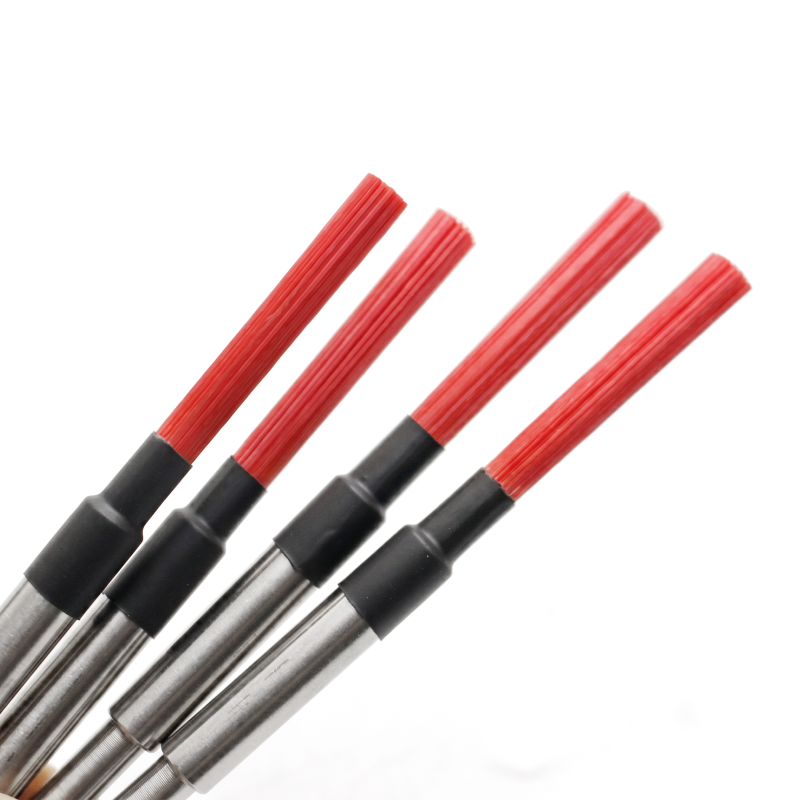
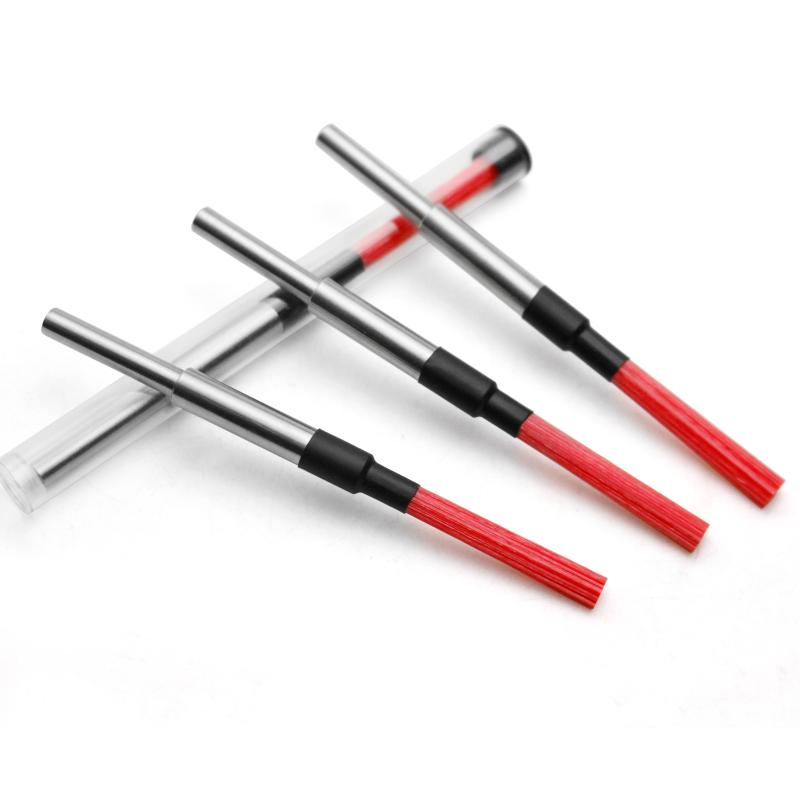
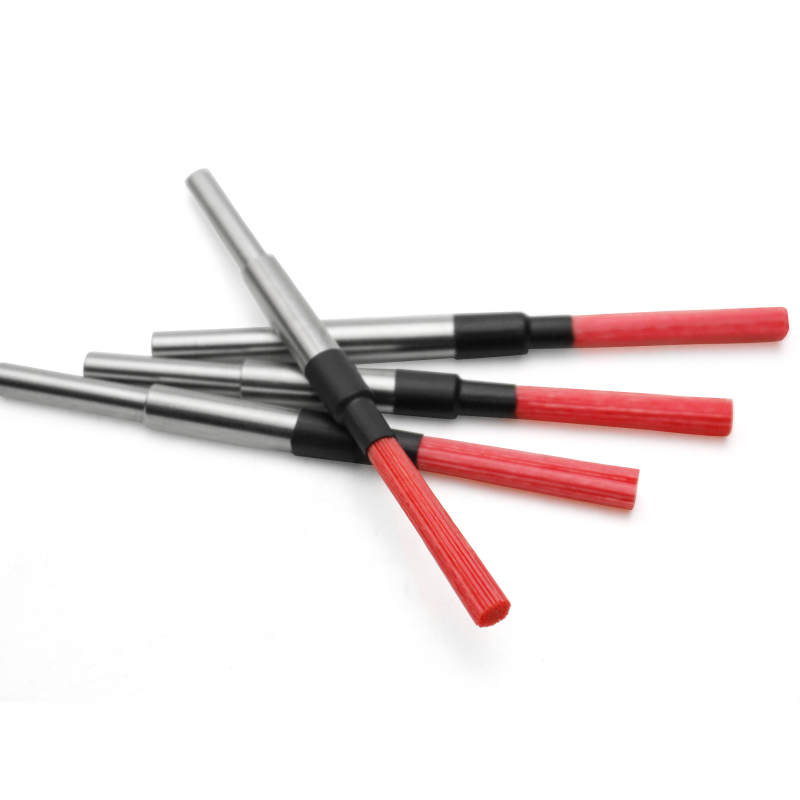
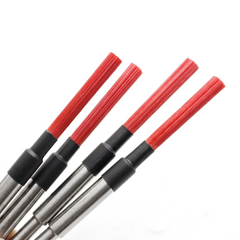
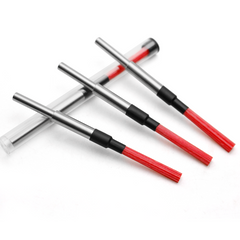
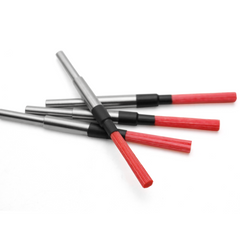
Our ceramic fiber heat-shrink end brush is manufactured from ceramic fiber (red/brown) and engineered for aggressive deburring, with key advantages including enhanced filament stability, reduced filament breakage and consistent shape retention.
Also known as custom ceramic fiber heat-shrink end brush, industrial end brush or end brush for aggressive deburring.
Customizable according to customer requirements – brush diameter, filament length, and shank size fully tailored to match specific bore sizes and workpiece geometries.
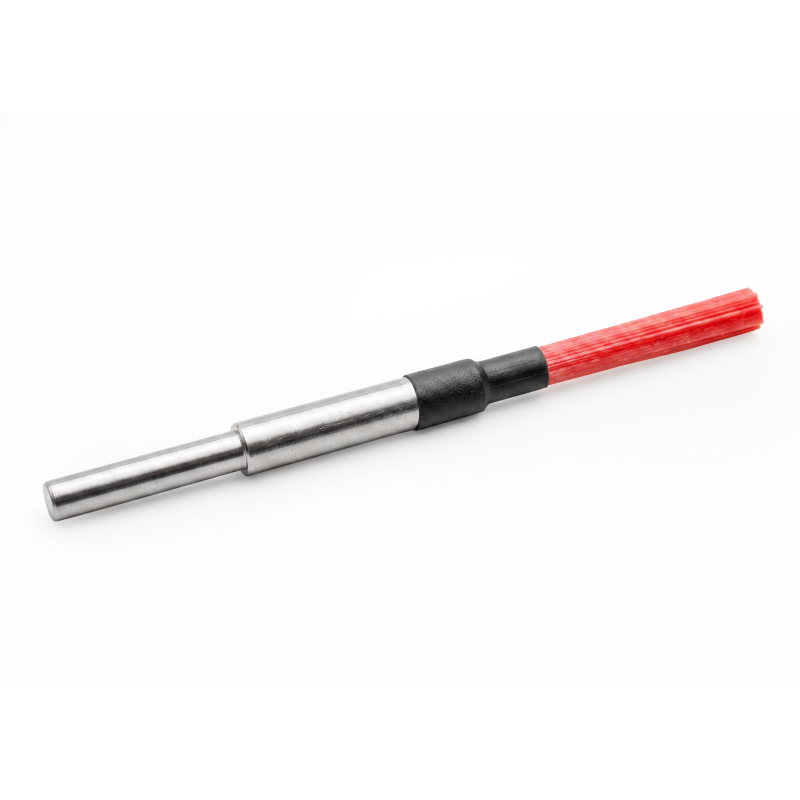
This brush is built from 2 material groups – the thousands of continuous sintered ceramic micro-fibers and steel shank:
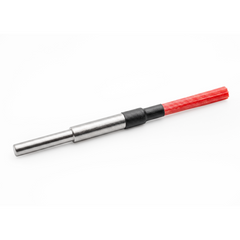
Our Ceramic Fiber End Brush with Heat-Shrink Sleeve features the same high-performance pure ceramic fiber construction as our standard ceramic fiber end brush, with a critical enhancement – a heat-shrink sleeve securely covering the junction where the ceramic fiber bundle meets the steel shank.
Heat-Shrink Sleeve Advantage:
The heat-shrink sleeve provides an additional layer of protection at the most vulnerable point of the brush – the transition zone between the rigid ceramic fiber bundle and the steel shank. This reinforcement delivers several key benefits:
Ceramic Fiber Performance:
Limitations:
Highest cost among all abrasive brush types. Cannot handle thick weld slag, heavy oxidation, or large casting flash. Engineered exclusively for precision micro-finishing, cutter mark removal, and microscopic deburring.
Performance Comparison:
| Feature | Ceramic Fiber with Heat-Shrink (This Product) | Standard Ceramic Fiber Brush | Abrasive Nylon Brush |
|---|---|---|---|
| Filament junction reinforcement | Yes – heat-shrink sleeve | No | No |
| Filament breakage resistance | Enhanced | Standard | Moderate |
| High-speed stability | Excellent | Excellent | Moderate |
| Cutting consistency | Constant through life | Constant through life | Declines with use |
| Heat resistance | Excellent (150°C) | Excellent (150°C) | Moderate |
| FOD/contamination risk | None | None | Low |
| Service life | Extended | Long | Moderate |
| Best for | High-speed, high-volume precision finishing | Precision finishing | General deburring |
Q1: What is the difference between this heat-shrink sleeve brush and a standard ceramic fiber end brush?
The heat-shrink sleeve covers the junction where the ceramic fiber bundle meets the steel shank, providing additional reinforcement at the most vulnerable point of the brush. This reduces stress concentrations during high-speed operation, minimizes filament micro-movement, and significantly extends brush service life by preventing premature fiber breakage at the base.
Q2: Does the heat-shrink sleeve affect the brush's performance or flexibility?
No. The sleeve only reinforces the junction area where the filaments meet the shank. The working tips of the ceramic fibers remain fully exposed and maintain their full cutting capability, self-sharpening properties, and rigid shape retention. The sleeve does not contact the workpiece during normal operation.
Q3: Can this brush be used on hardened steel and superalloys?
Yes. Ceramic fiber brushes are specifically engineered for hard alloys, superalloys, and heat-treated materials including Inconel, Hastelloy, Titanium, and hardened tool steels. The self-sharpening ceramic fibers maintain cutting effectiveness on materials that quickly dull conventional abrasives. The heat-shrink sleeve ensures the filaments remain securely anchored even under demanding high-speed conditions.
Q4: What is the advantage of ceramic fiber for cross-hole deburring?
Ceramic fiber brushes maintain their shape without deformation, allowing them to effectively reach and deburr intersecting hole edges in hydraulic valve blocks and manifold systems . The rigid fibers provide consistent contact pressure at the intersection point, completely removing burrs without damaging the surrounding bore. The heat-shrink sleeve ensures the brush maintains its structural integrity during the centrifugal expansion required for cross-hole work.
Q5: Is the higher cost of the heat-shrink sleeve version justified?
Yes. For high-volume CNC production and demanding applications where filament breakage is a concern, the heat-shrink sleeve provides critical reinforcement that extends brush service life and reduces unplanned downtime. The additional protection at the filament-shank junction is especially valuable in automated cells where consistent, predictable tool life is essential for production scheduling.
Our ceramic fiber end brushes with heat-shrink sleeves are engineered for the most demanding high-speed precision finishing applications. The reinforced filament junction provides extended service life and reliable performance in automated CNC environments.
Contact us for technical recommendations, custom sizing, and bulk order quotes. Provide your application details, workpiece material, and equipment specifications for a prompt engineering review.
Browse our full Ceramic Fiber Brush Series for additional precision finishing solutions, or explore our End Brush Series for other deburring and finishing requirements.
Thanks for subscribing!
This email has been registered!