




Product Name:
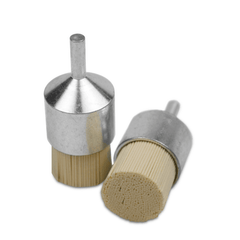
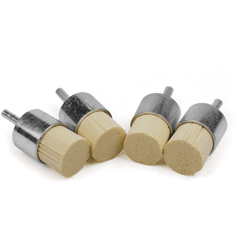
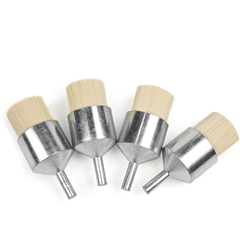
Ceramic Abrasive Nylon Filament End Brush – Ultra-Precision Deburring and Mirror-Finish Surface Conditioning
Product Size:
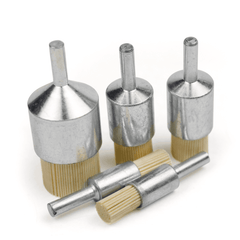
Customizable according to customer requirements – brush diameter, trim length, and shank size fully tailored to match specific bore sizes and workpiece geometries.
Refference Drawing:

Standard Series:
| Dia A | Trim B | Shaft D. C | Shaft l. D | Total l. E | Part No. |
| Ceramic 240# Crimped | |||||
| 6 | 10 | 6 | 50 | BC241006 | |
| 8 | 10 | 6 | 20 | 50 | BC241008 |
| 10 | 10 | 6 | 18 | 48 | BC241010 |
| 12 | 15 | 6 | 21 | 56.5 | BC241512 |
| 14 | 15 | 6 | 17 | 57 | BC241514 |
| 16 | 15 | 6 | 23 | 65 | BC241516 |
| 18 | 15 | 6 | 23 | 61 | BC241518 |
| 20 | 15 | 6 | 22 | 60 | BC241520 |
| 25 | 20 | 6 | 20 | 67 |
BC242025 |
Product Material Composition:
-
Filament Material: High-temperature resistant Nylon 6.12 filaments with uniformly embedded high-purity ceramic aluminum oxide micro-grains (microcrystalline sintered ceramic alumina) – premium abrasive with superior hardness, toughness, and self-sharpening properties; 2-3x longer service life than standard aluminum oxide abrasive
-
Shank Material: Steel shank for secure mounting in CNC machining centers, drill presses, and automated equipment
4、Product Features and Applications:
Our Ceramic Abrasive Nylon Filament End Brush features high-temperature resistant Nylon 6.12 filaments uniformly embedded with high-purity ceramic aluminum oxide micro-grains (microcrystalline sintered ceramic alumina) . This premium abrasive delivers superior hardness beyond standard white fused alumina, with enhanced toughness and aggressive self-sharpening properties – making it the ultimate choice for ultra-precision deburring and mirror-finish surface conditioning.
Key Features:
-
Premium Ceramic Abrasive – microcrystalline sintered ceramic alumina provides superior hardness and toughness compared to standard aluminum oxide; 2-3x longer service life than conventional AO abrasive
-
Ultra-Precision Capability – controlled cutting action for micro-deburring, micro-edge radiusing (微小R角倒钝), and mirror-finish surface conditioning
-
Self-Sharpening Excellence – ceramic grains continuously micro-fracture during use, exposing fresh, sharp cutting edges for consistent performance
-
Low Heat Generation – cool-cutting action prevents thermal damage, discoloration, or burning on sensitive workpieces
-
Zero Contamination – no metallic debris, no iron ion contamination; safe for precision mating surfaces and high-value components
-
Unmatched Wear Resistance – significantly longer service life than silicon carbide or standard aluminum oxide abrasive brushes
-
Chemical Resistance – resistant to cutting fluids, emulsions, and mild acid/alkali solutions
Application Fields:
-
Premium Hydraulic / Proportional Servo Valve Components – ultimate deburring of cross holes, damping holes, and critical flow passages (core flagship application)
-
New Energy Vehicle High-Precision Aluminum Die-Castings – precision finishing of EV battery housings, motor housings, and structural components
-
3C Electronics High-End Precision Metal Parts – deburring and surface conditioning of premium electronic device components
-
Aerospace Aluminum and Titanium Alloy Structures – precision post-processing of critical aircraft components
-
High-Precision Injection Molding and Die Casting Molds – cleaning and finishing mold water lines, inserts, and complex cavities
-
Stainless Steel, Hardened Steel, and High-Hardness Small Components – precision deburring of demanding materials
-
Fully Automated CNC Machining Centers – designed for high-takt automated batch production
-
Ultra-Fine Surface Pretreatment – pre-treatment for painting, electroplating, PVD, and vacuum coating processes

Limitations: Cannot handle heavy flash, weld slag, or thick oxidation – this brush is engineered for ultra-precision finishing only. Higher cost than silicon carbide or standard aluminum oxide abrasive brushes; value justified by superior performance and extended service life in demanding applications.
Frequently Asked Questions (FAQ)
Q1: What is the difference between ceramic abrasive and standard aluminum oxide (AO) abrasive?
Ceramic abrasive (microcrystalline sintered alumina) provides superior hardness, toughness, and self-sharpening properties compared to standard AO. It lasts 2-3 times longer, generates less heat, and maintains consistent cutting performance throughout the brush's service life. The difference is especially noticeable on high-hardness materials and high-takt production environments.
Q2: Why is ceramic abrasive the preferred choice for hydraulic servo valve cross-hole deburring?
Hydraulic proportional and servo valves require absolute burr-free precision in cross holes and damping holes to ensure proper flow characteristics and prevent valve sticking. Ceramic abrasive provides the ultra-precision micro-deburring capability needed without altering critical dimensions or introducing contamination – making it the ultimate solution for this demanding application.
Q3: Can this brush be used on hardened steel and stainless steel components?
Yes, ceramic abrasive is ideal for hardened steel, stainless steel, and high-hardness small components. The superior hardness of ceramic grains enables effective deburring on materials that quickly dull standard aluminum oxide or silicon carbide abrasives.
Q4: What operating speed should I use for ceramic abrasive brushes?
For optimal performance, operate at recommended speeds based on brush diameter. Generally, use lower speeds (500-1500 RPM) for larger diameters and higher speeds for smaller diameters. Always start at lower speeds and increase gradually. The self-sharpening ceramic grains work best with consistent light pressure – only the filament tips should contact the workpiece. Excessive pressure does not improve results but may reduce brush life.
Q5: Is the higher cost of ceramic abrasive brushes justified?
Yes, for demanding ultra-precision applications and high-volume production, the 2-3x longer service life, consistent performance, and superior finish quality of ceramic abrasive brushes provide significant cost-per-part savings. The reduced tool change frequency and improved process reliability justify the premium investment.
Ready to Elevate Your Ultra-Precision Deburring and Finishing Operations?
Our ceramic abrasive nylon filament end brushes are available with customizable diameters, trim lengths, and shank configurations to match your most demanding ultra-precision deburring and surface finishing requirements.
Contact us for technical recommendations, custom sizing, and bulk order quotes. Provide your application details, workpiece material, and equipment specifications for a prompt engineering review.
Browse our full End Brush Series for additional deburring and finishing solutions, or explore our custom industrial brushes for other specialized requirements.
- Choosing a selection results in a full page refresh.